
I’m no food critic, but my opinion matters. Well, I think so anyway. After having a seemingly pleasant lunch with my dad last Thursday at Chishuru, the modern West African Michelin-starred restaurant which is all the rave of the moment, I found myself unable to shake off a lingering heaviness that had developed by the end of the lunch. So I took to my IG Stories to share my thoughts… the food was good, but does it outweigh everything else?
What this article is not, is a witch-hunt to bash Chishuru, nor to nit-pick at minor things that didn’t meet my expectations of a “Michelin Star restaurant”. In fact their website does a good job of lowering your expectations to something realistically humble; “Chishuru is not a fine dining restaurant. Yes we have a Michelin star but our style is relaxed and homely, we play music, and some of our customers can get loud – that’s who we are.” So perhaps the response from our waitress about “being mindful of waste” when we alerted her attention to the chipped plate served to dad, is in line with the lowered expectations.
The Good
So let’s start with the positives. Who doesn’t love to root for the underdog? Chishuru’s journey is one of humble beginnings in Brixton as a popup and supper club, winning a local competition, and receiving critical acclaim from food critics such as Jimi Famurewa and Jay Ryner. Notably, its recent Michelin Star status marks its founder and head chef Adejoké ‘ Joké’ Bakare as the UK’s first Black Female Michelin Starred Chef, and only the second Black Female Chef in the world to receive this prestigious accolade. It’s through platforms such as Be Inclusive Hospitality and TopJaw that Chishuru appeared on my radar. With their permanent home in Fitzrovia being, literally, up the road for me in Soho, I figured it was time I paid this modern West African restaurant a visit. Despite scouting their website almost daily for availability without much luck (a good sign of business doing well if they are constantly fully booked), a last minute lunch slot became available that Thursday morning. Cue in another of my father-daughter dates!
The food is good. It’s based on the cuisine of West African influence with a touch of Western fine dining, allowing for creativity and impressive presentation. The jollof dish on the set lunch menu was reminiscent of homemade cooking, while the other dishes sparked interesting conversations with my dad. For example, the akara led us to discuss Brazil, where it’s served as a popular street food called acarajé. Having proudly extensively researched my ‘Tabom‘ heritage (Afro-Brazilian returnees to Ghana, then the Gold Coast, in 1835) both in Ghana and in Brazil, I enjoyed sharing my knowledge with my dad. While the food alone would have warranted high praise, the overall experience in hospitality relies heavily on the quality of service. I will delve into the service aspect later, but first, let’s continue with the positives.
Starters
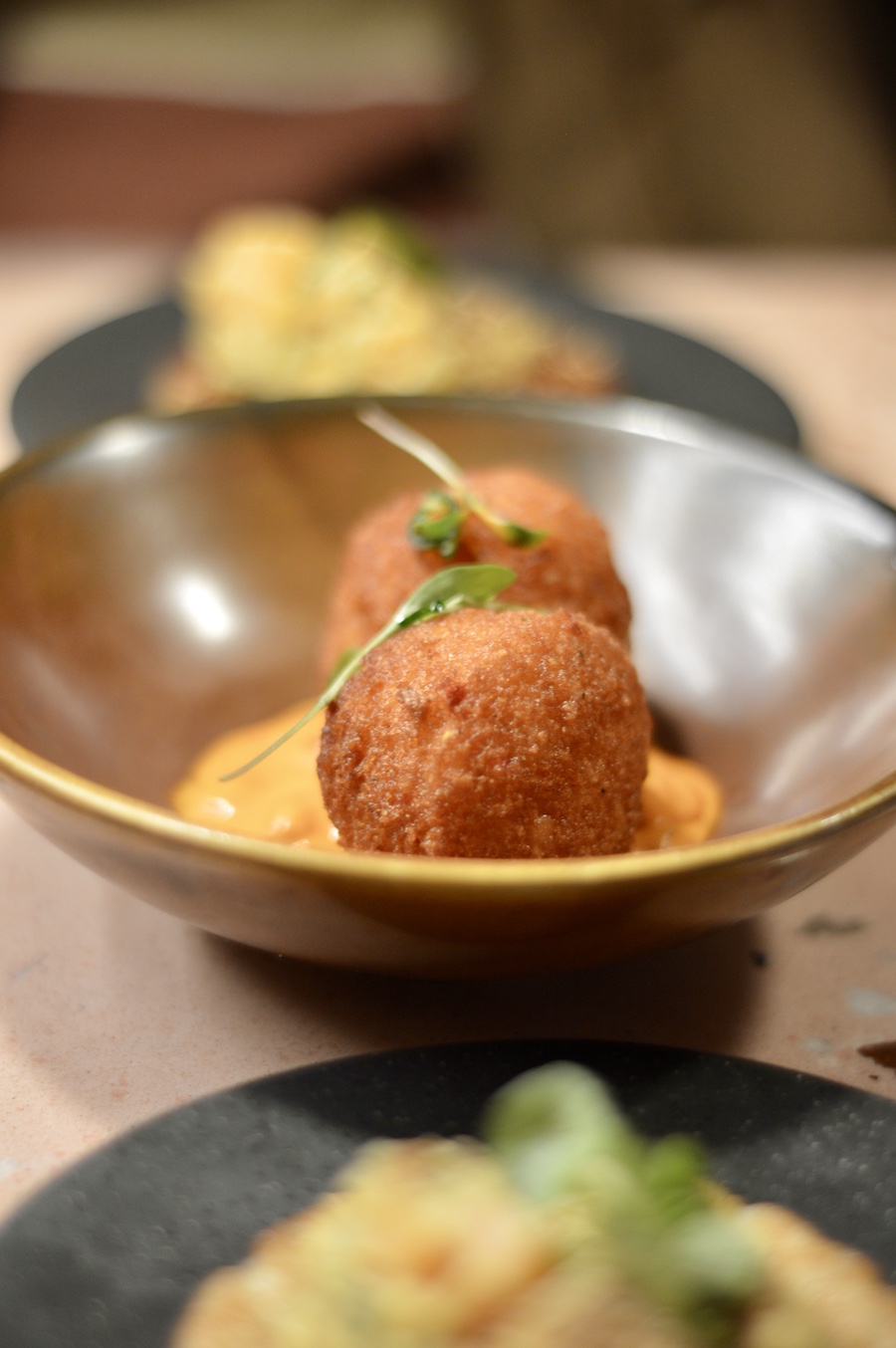
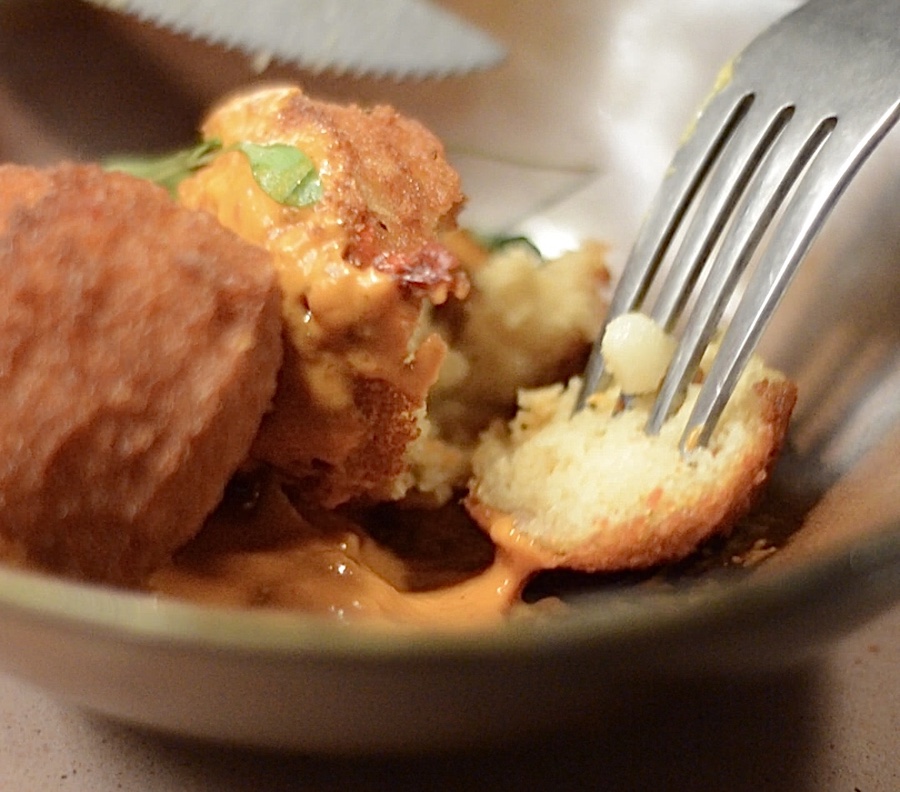
Akara, a traditional Nigerian deep-fried bean cake, is featured on the set lunch menu as a starter. It was crisp on the outside and light and sponge-like on the inside to help mop up the delightful bright orange-hue sauce it came with. I enjoyed the subtle distinct flavour note of palm oil I associate with both akara and the Brazilian version, acarajé. I also liked the chunks of sweated-down chopped onions, an ingredient that plays a key part in West African household cooking. The second starter was a fermented rice cake. Fermented starches, particularly from corn and root vegetables, hold significant importance in West African cuisine (evident in dishes like Ghanaian kenkey). This rice cake served as a subtle yet palatable nod. Sitting proudly on top was a concoction reminiscent of what I can only describe as ‘Heinz vegetable salad’ (I haven’t seen them around for a minute, wow!) It evoked nostalgic memories of this all-so-familiar item. Back in the day in Ghana, referring to “salad” would conjure the image of a tin of Heinz Vegetable Salad, thanks to British influence and the influx of canned goods during colonial times. I shared this observation with Dad, which made him laugh, and recall that salad was pretty much Heinz vegetable salad mixed with other ingredients, like potatoes, eggs and mayonnaise, rather than a salad leaf, during his upbringing in Ghana. *insert emoji shocked face*

Mains
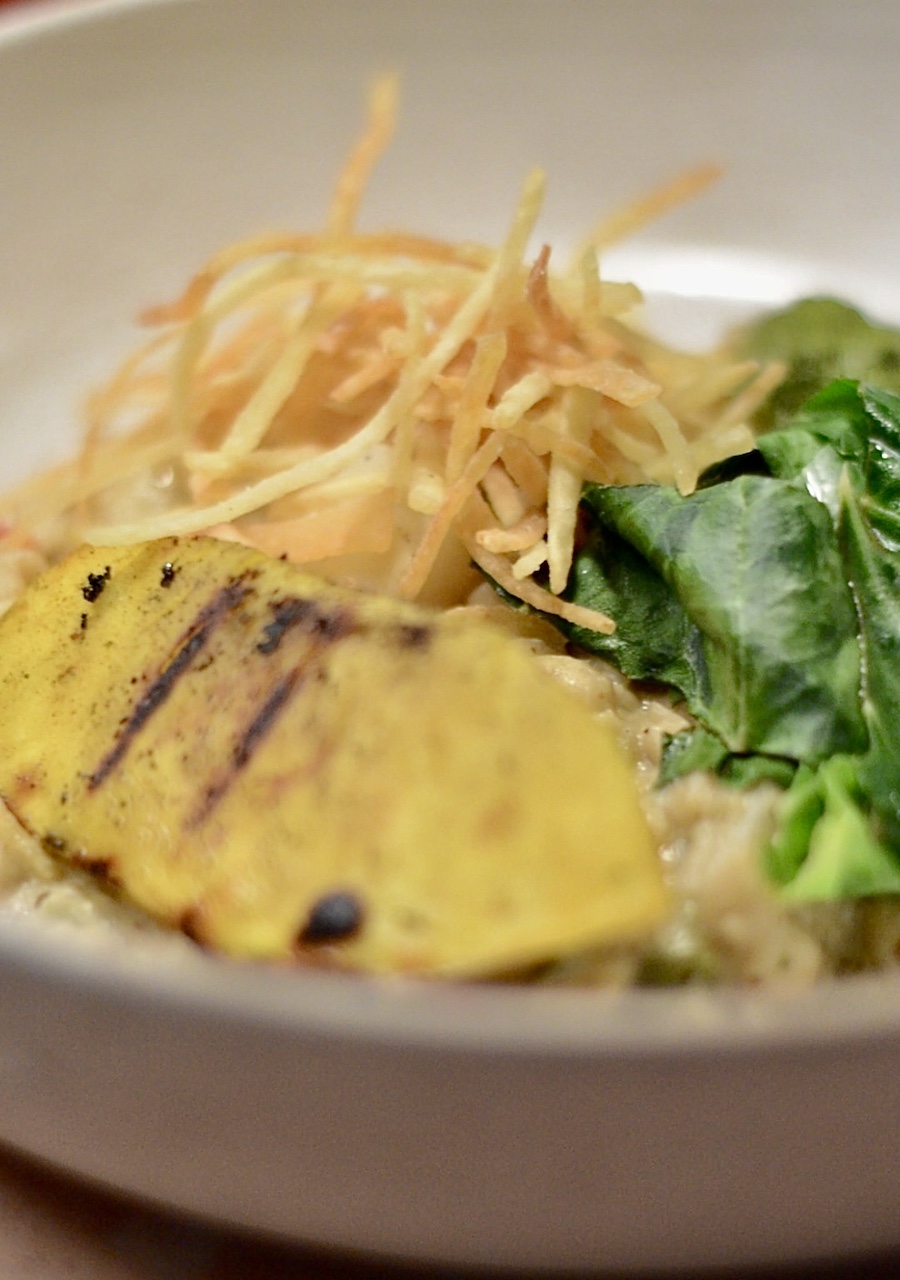
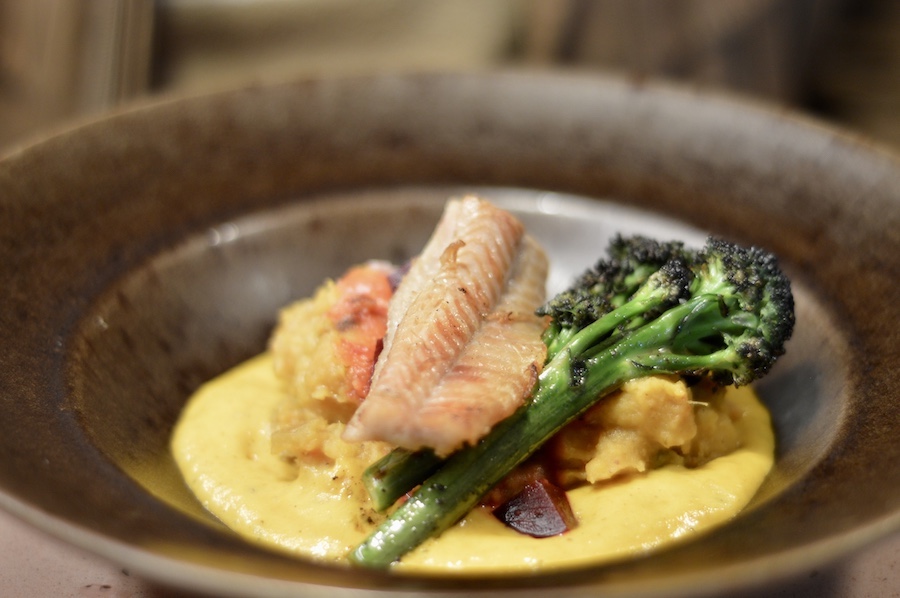
I’m now what you’d call a “flexitarian” to accommodate the various press invitations I receive for food-related work. But my dietary reference still leans towards pescatarian or vegetarian. I was glad to see these options on the menu without it being an additional request. My dad had first dips at choosing the main and went with the eel dish, so I chose the vegetarian breadfruit dish. While the star ingredients have never made an appearance in my Ghanaian household cooking, I have previously enjoyed the most delicious eel from a street food stall in Praia, Cape Verde (West Africa), and I am familiar with breadfruit from my trip to the Caribbean island of Jamaica. Both dishes were hearty and quite enjoyable, although the accompanying vegetables were merely satisfactory. We also ordered jollof rice to accompany our meal, and to my surprise, it was prepared in a more typical Ghanaian style rather than the Nigerian method which tends to favour American long-grain rice. We both found it delightful.
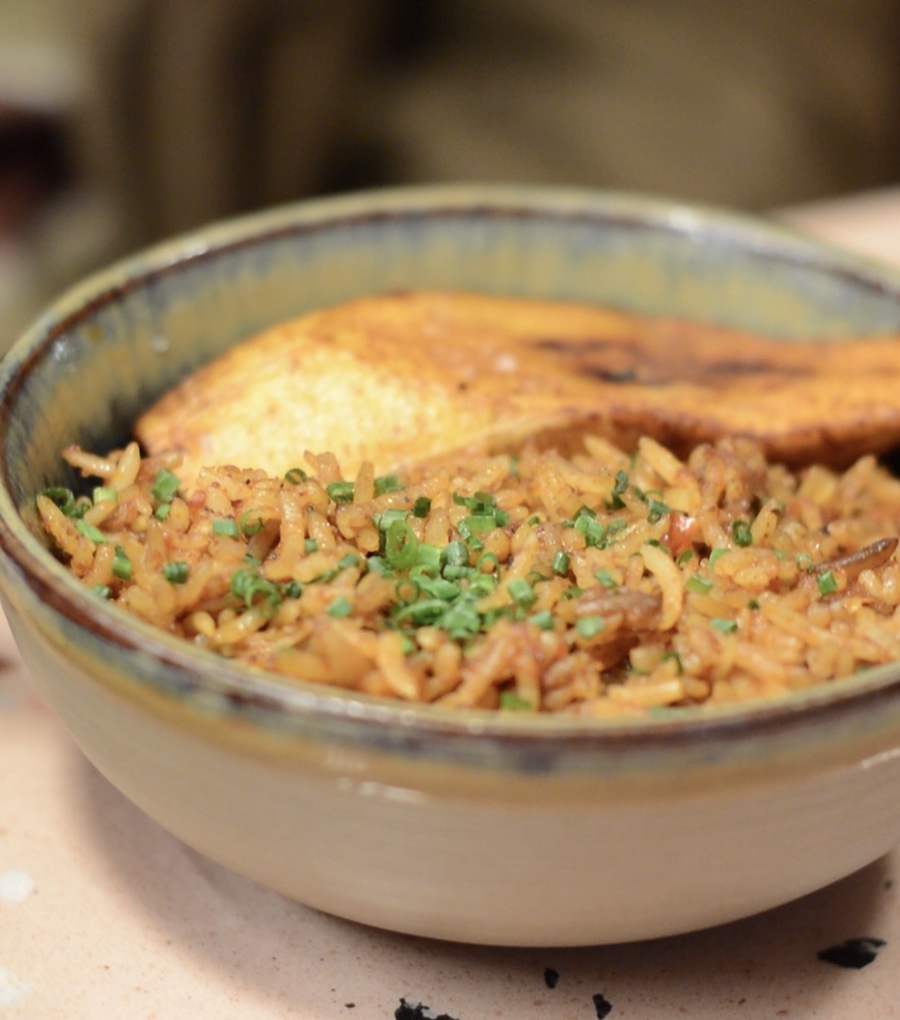
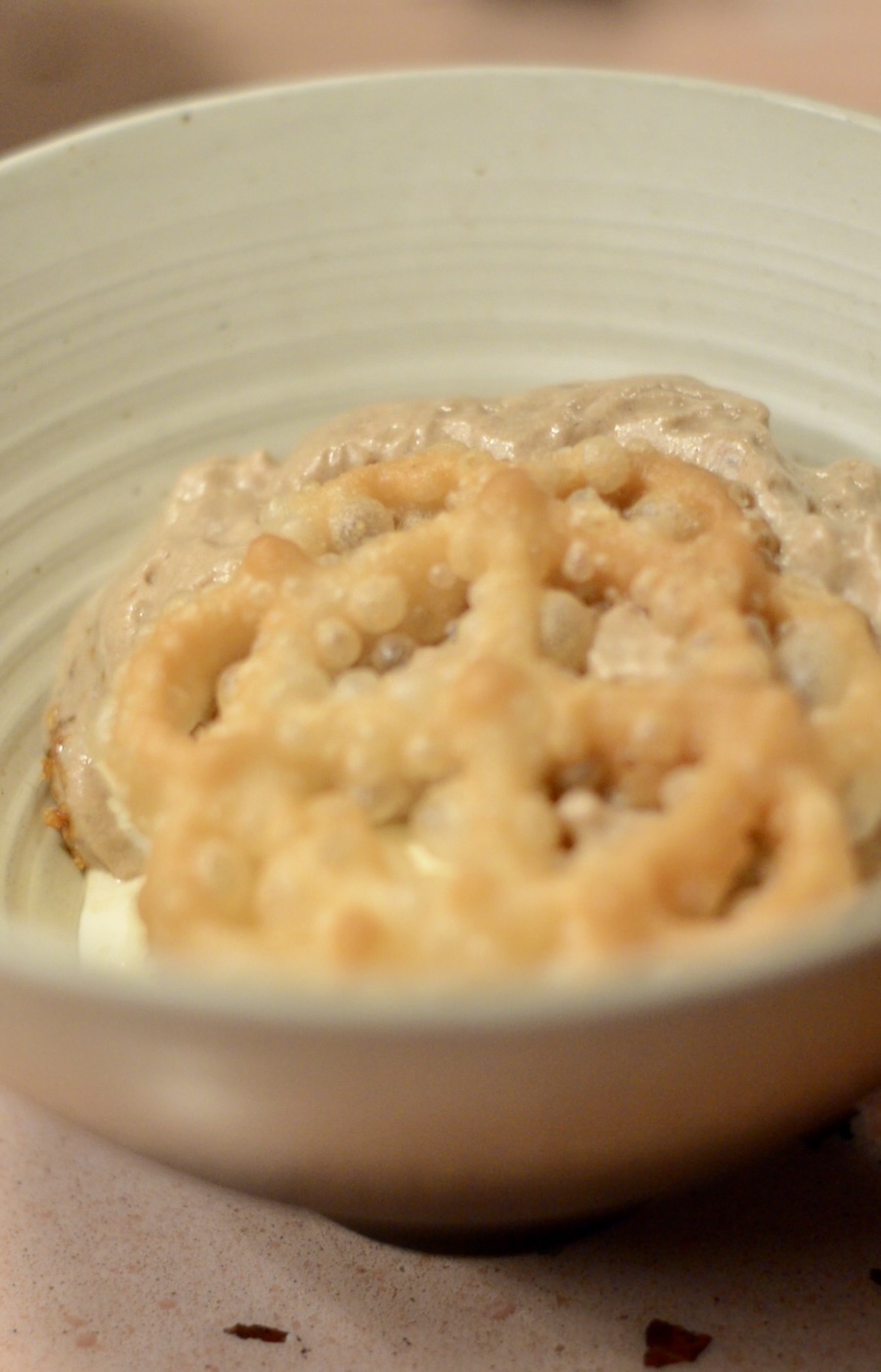
So far, so good.
We ended our meal with a dessert unlike anything I had tried before, so when neither Dad nor I could use familiarity as a talking point, we sat in silence and enjoyed our light and creamy dessert. Oh, but Dad did comment before dessert arrived; “but do Africans normally have dessert?” and that’s where I intervened to remind him that this is a ‘modern take’, catering to a wider audience, and more so, it’s the chef’s interpretation. He backed down from the subject with raised eyebrows the way African parents do when they let you win a case.
I quite enjoyed that this West African restaurant isn’t based on stereotypical expectations of an African experience. Even the aesthetics of the restaurant doesn’t scream ‘Welcome to Africa!‘ I don’t think you’ll find a single leopard print in sight if that’s the African validation you’re seeking. We both agreed that despite the small servings, we were actually full. Eating to one’s satisfaction is certainly part and parcel of a typical West African food experience – usually bestowed upon by mums and aunties!
Based on the food alone, we should have left as happy customers.
For the very first time West African, Black Female Owned, Michelin Star, not to mention closer to home for me, West End restaurant, are words which are being used in the same sentence. This is a big deal and worth shouting about (and I go hard for places I love and respect).
But we left burdened.
I’m using this article as a chance to ponder and unravel the events of the past few days where I’ve faced insults and trolling simply for expressing a general opinion on a relatively small platform (my IG Stories). I wouldn’t usually ‘air out dirty laundry’ so to speak, outside of a safe space where it could be subject to misinterpretation by those outside my culture or those who have not engaged with my work yet feel entitled to criticise me. As the African proverb goes, until the lion learns to speak, the hunt will always glorify the hunter. It was called for so here it goes…
Hospitality & Cultural Connection
I’ve learned that people will forget what you said, people will forget what you did, but people will never forget how you made them feel.
– Maya Angelou
In hospitality to be seen is to feel valued. Over the past year and a half, my dad and I have regularly scheduled “father-daughter” dates. It was I who took the first step to initiate this in an effort to revive our once-close bond, which had faded during my mid-teens. It’s amazing how the simple act of sharing a meal together can serve as a catalyst for healing. Some of our favourite experiences actually have little to do with the food in all honesty. While I may not remember every dish I sampled from the Savoy Grill tasting menu, for example, I can still vividly recall the genuine care restaurant director Thierry Tomasin showered us with, which has left a lasting impression. In fact, my dad who isn’t one for fancy-schmancy dining, recently returned to the Savoy Grill to enjoy a meal with my stepmum. Gestures, even as simple as a smile – no one is asking for theatrics – can make a profound impact.
Now back to Chishuru where it turned downhill for us. Had we, the only black (my dad would use African, but I’m using black because you can’t hide skin colour but Nationality can be ambiguous) customers on the service floor, been snubbed by the owner and head chef, Joké’ Bakare, as she walked by to greet a group of white businessmen in a friendly and animated manner? Call it petty, but this isn’t about race, it’s about culture. I for one missed the memo that the ‘black code’ of acknowledgement of each other especially in white environments – has expired. I was actually sad for my dad who’s dedicated his life’s work to what I refer to as “the Africans unite” cause. So to be the only West African customers in a West African restaurant, and ignored by the West African we’d come to support, was needless to say, painful.
Would I have cared so much if Joké wasn’t black? Probably not. But would I also have spent £100+ on lunch for a modern take on food I’m all too familiar with – a cuisine mastered so well amongst my aunties that I’ve rarely had to pay for it, if she wasn’t black? Probably not. So I’ll say it:
I was there to support a black African-female-owned business, not because I was intrigued about trying West African cuisine.
West Africans as a people in general, are known to be very friendly, warm and welcoming. Another stereotype which blurred my expectations. When Joké returned to the open kitchen, this time with my dad facing her, I anticipated some form of acknowledgement – perhaps eye contact, a smile. However, there was nothing. In fact, her attitude reflected a familiar coldness, an air of snobbery one is all too familiar with when one’s made to feel they’re not wanted.
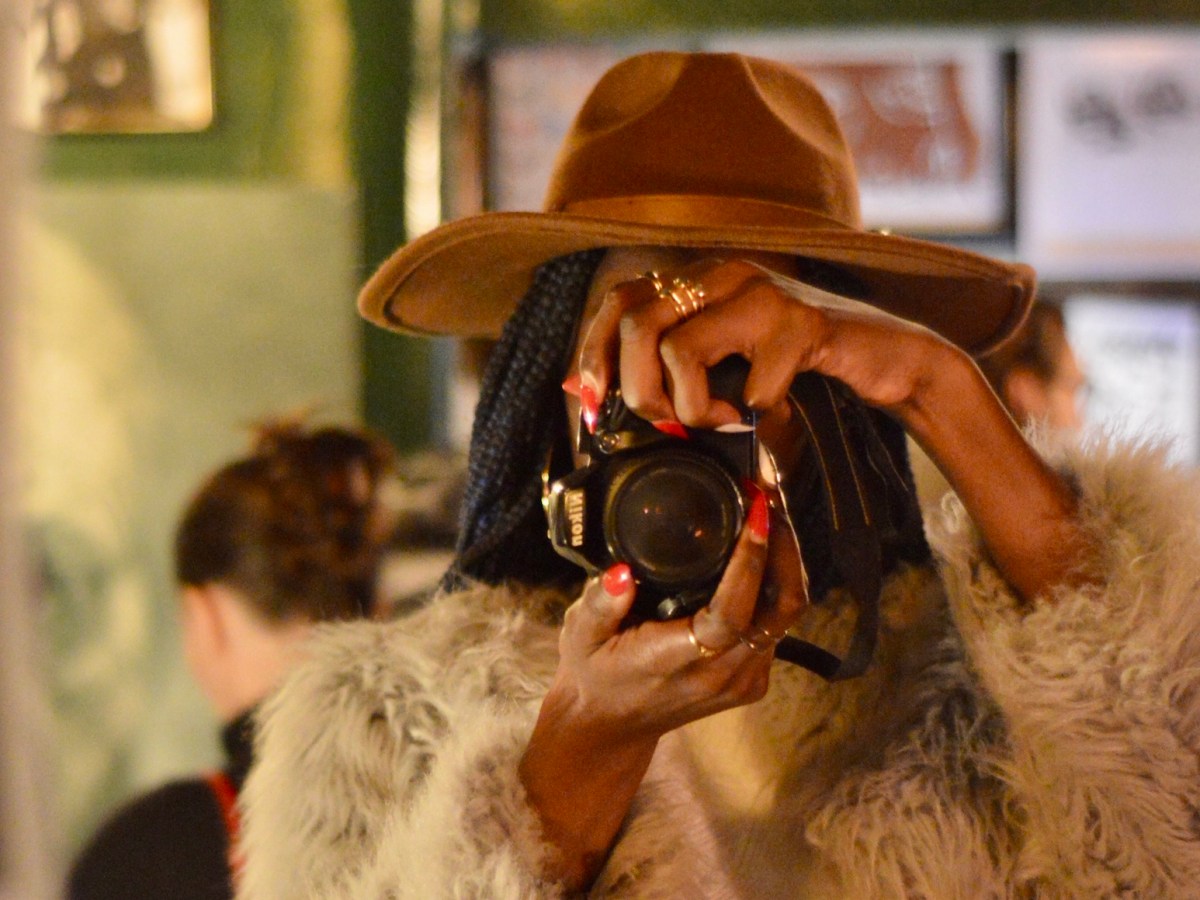
Now, as a paying customer, it is not my responsibility to speculate the 101 potential scenarios that could have led to this situation. Did Joké genuinely not see us, the only black dining guests on the restaurant floor? Was she perhaps having a bad day and it showed on her face? Could it be that she didn’t want us there, or assumed we are there to criticise her interpretation of West African cuisine simply because we are also black? Or could it be due to our choice not to order from the French wine list? These were genuine thoughts that raced through my mind. “Is it just me or did you sense it too?” I asked my father in our native Ga language, to avoid our waitress overhearing and thinking we were trying to kick up a fuss. He sighed in agreement. As we finished our meal, I felt the need to dispel my doubts. I considered that if I requested to speak with the chef to express my compliments and introduce myself as the editor of a local publication, I’d see that it was nothing personal and I could get back to my initial contentment. To clarify, this was not a press visit. If I wanted pictures, an interview, or any sort of “additional acknowledgement”, I would have reached out with a PR request long ago, or even mentioned on my arrival that I’m press. But I didn’t because this was my off-duty time with Dad. My camera was out because I’m also a social media content creator.
The waitress came back to say Joké was unavailable.
I think had we not encountered Joké in person, thanks to the open kitchen (which seems designed, at least in part, for performance and theatrics), or seen her friendly and animated engaging with the group of European businessmen earlier on the restaurant floor, my Dad and I would have formed our opinion solely based on the food, leading to a positive experience overall. Could it be that the newfound level of acclaim has propelled this head chef into the spotlight, resulting in an un-asked-for celebrity-like status. Maybe it does get tiring being requested to be congratulated, or requested for a picture (which I for one did not request – I’m also a black woman too, and would hate to be put on the spot for a picture if I’m not prepared for it). But like I said, we weren’t there because we’ve never had West African food before, it was to celebrate one of our own (another memo I missed that has expired).
I paid and we left, heavy never-the-less.
This lingering heaviness persisted when I got home, overshadowing the overall positives of my lunch with Dad. I took to my IG Stories (my safe space) and shared a generalised opinion about the day’s lunch. While my platform is dedicated to highlighting positive experiences, I remain true to myself by providing honest assessments. I humoured my dad being on time (hallelujah) and it being me being tardy thanks to walking with crutches and a boot. I jokingly (well, kinda actually serious) claimed the jollof rice as Ghanaian (an ongoing, mostly light-hearted jollof rivalry between Ghanaians and Nigerians). I also mentioned finding the service to be cold, without specifying names or tagging the restaurant visibly, strategically avoiding appearing to discredit anyone. This was in no way ‘bashing’, especially as I didn’t mention the venue.
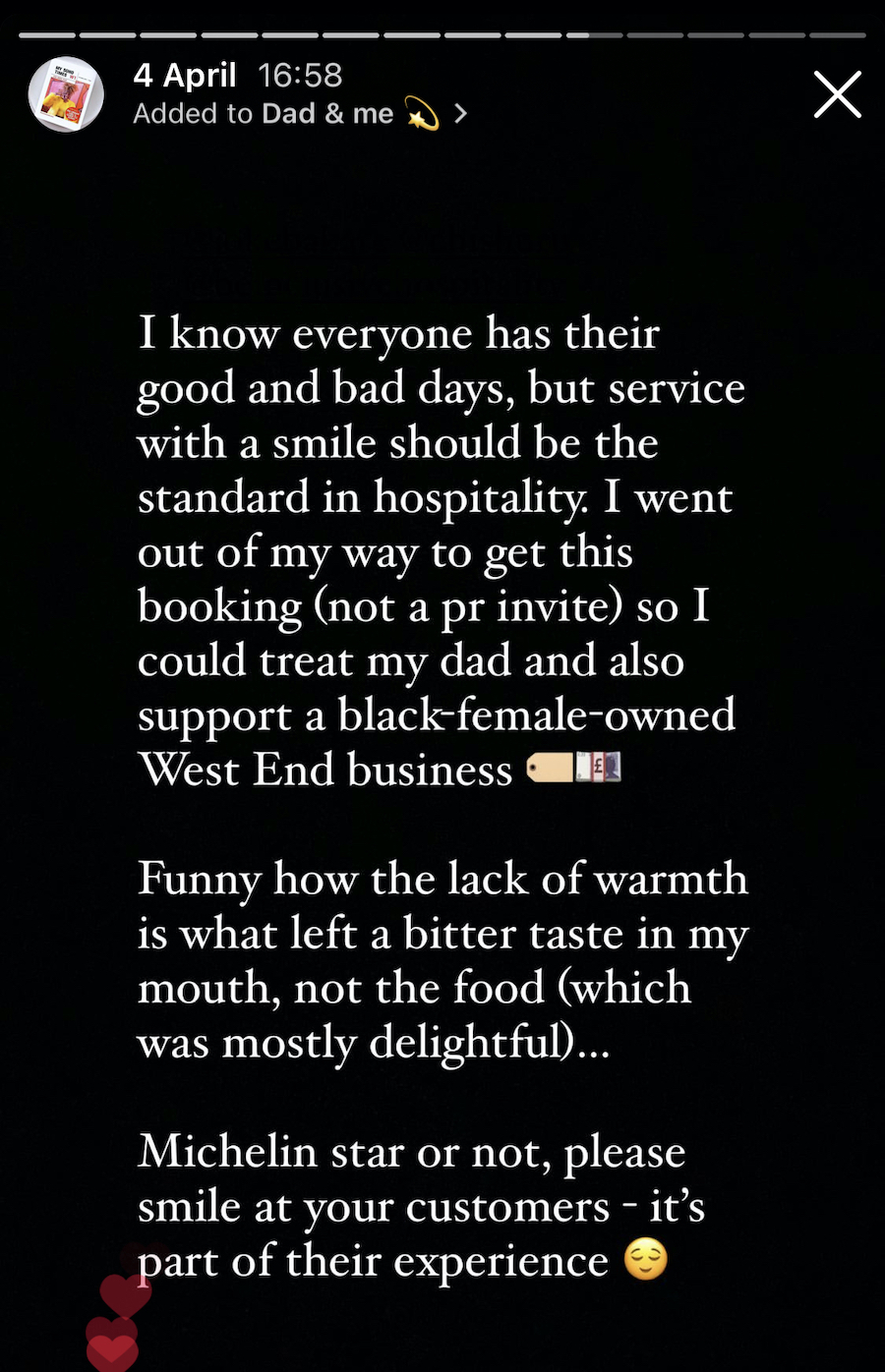
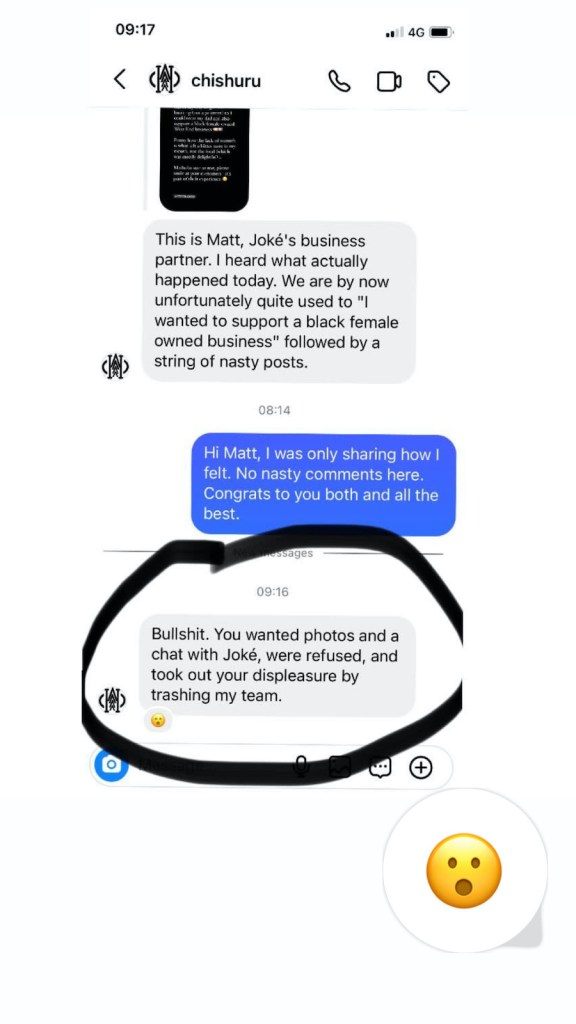
Subsequently, the restaurant responded in an unprofessional manner which left me shocked.
The Takeaway
Get a PR agency to run your comms if you can’t take criticism.
Chishuru has so many amazing accolades, however, this also comes with greater responsibility; customer service, PR, and professionalism. Unfortunately, their handling of this recent situation lacked the expected level of professionalism. Despite having the opportunity to address the issue with a basic “we’re sorry you felt this way” apology, or to disregard it entirely – I’m a small fish in the sea after all with only 4K followers and only a fraction see my IG Stories (my life as “the Soho girl” is surprisingly not as eventful as you might expect despite living in the heart of London, I’m a home buddy on days I don’t need to be out). Instead, Chishuru chose to share my diplomatic correspondences with them from that morning with their 30K+ followers, subjecting me to the brunt of their trolls.
In Conclusion: To Visit or Not to Visit?
I might forget the name of a dish I had, or what it tasted like, but I rarely forget how good service made me feel because it’s a huge part of my reason for eating out.
Despite my thumbs up for the food, it’s a thumbs down for the overall experience, especially how they retaliated. I’m not here to say don’t go to Chishuru because of the experience I had, nor, sadly, can I wholeheartedly recommend it. Every dining experience is subjective and can vary for each individual. What’s come out of this is to not take for granted how good service makes you feel valued. Customer retention is the secret to longevity in the industry, and I being a West End local, I wouldn’t have thought twice about returning for client meetings, or even with family members and friends, had it panned out differently of course.
The restaurant industry is constantly evolving, and establishments have the opportunity to learn and improve based on constructive feedback. As diners, we play a part in shaping these experiences by providing our honest feedback. This is in no way the same as slandering, or bashing a venue for no apparent reason.
In the end, the decision to visit Chishuru is up to you. I’m over the black code thing; sure maybe my expectations were too high and I’ll take that, but I’m still rinsing the bitter taste of how they retaliated from my mouth.
wait… you weren’t expecting a booking link and restaurant info were you? Chale, Google is your friend oo!
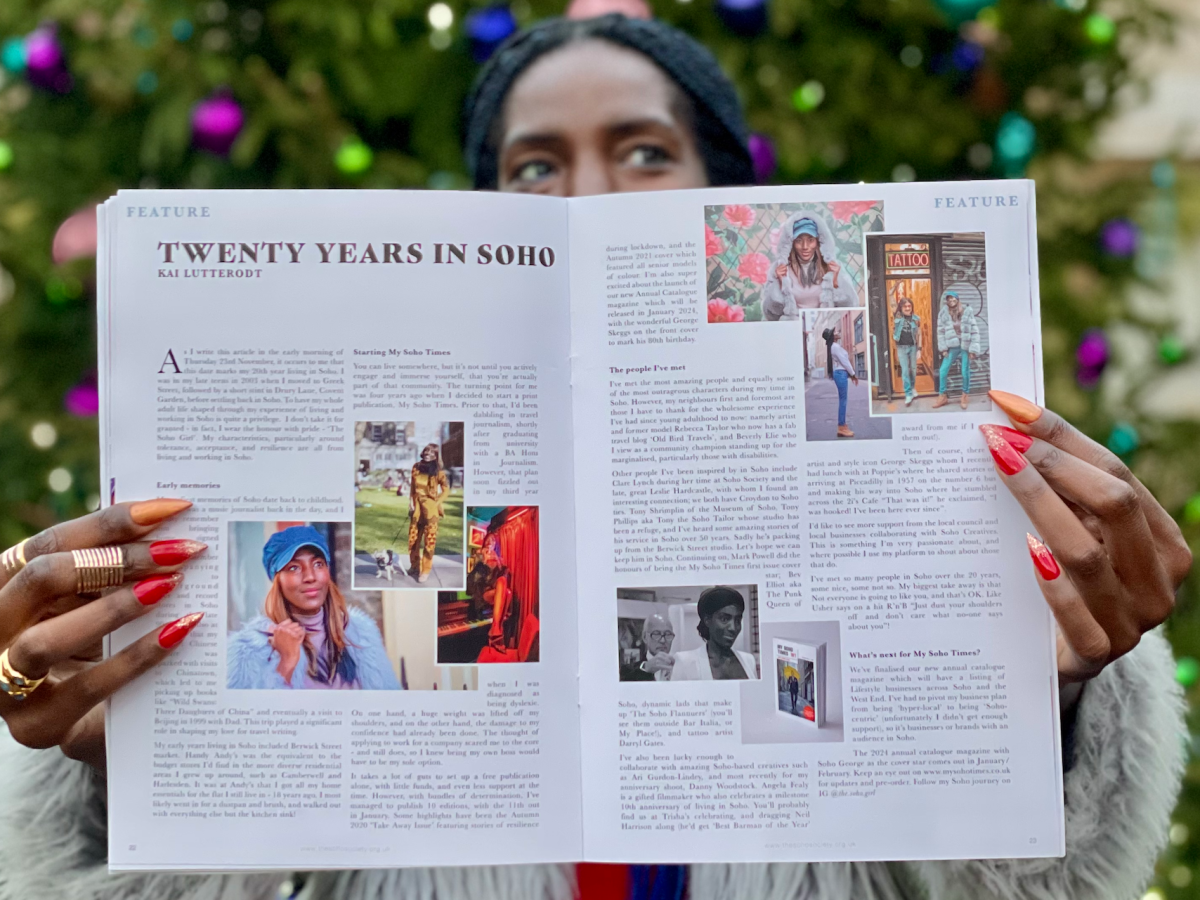
Words, images and social media content by Kai Lutterodt | IG @the.soho.girl | X @thesohogirl. I’m delightfully dyslexic, please excuse the typos.
Share your thoughts in the comment box below!
More from the blog

Get social with us – follow and tag us! @mysohotimes #MySohoTimes



Get the news straight into your Inbox!
Sign up for the latest news, events, and discounts from our partners in and around Soho in a MONTHLY newsletter… Ready to join the club?
 MY SOHO TIMES