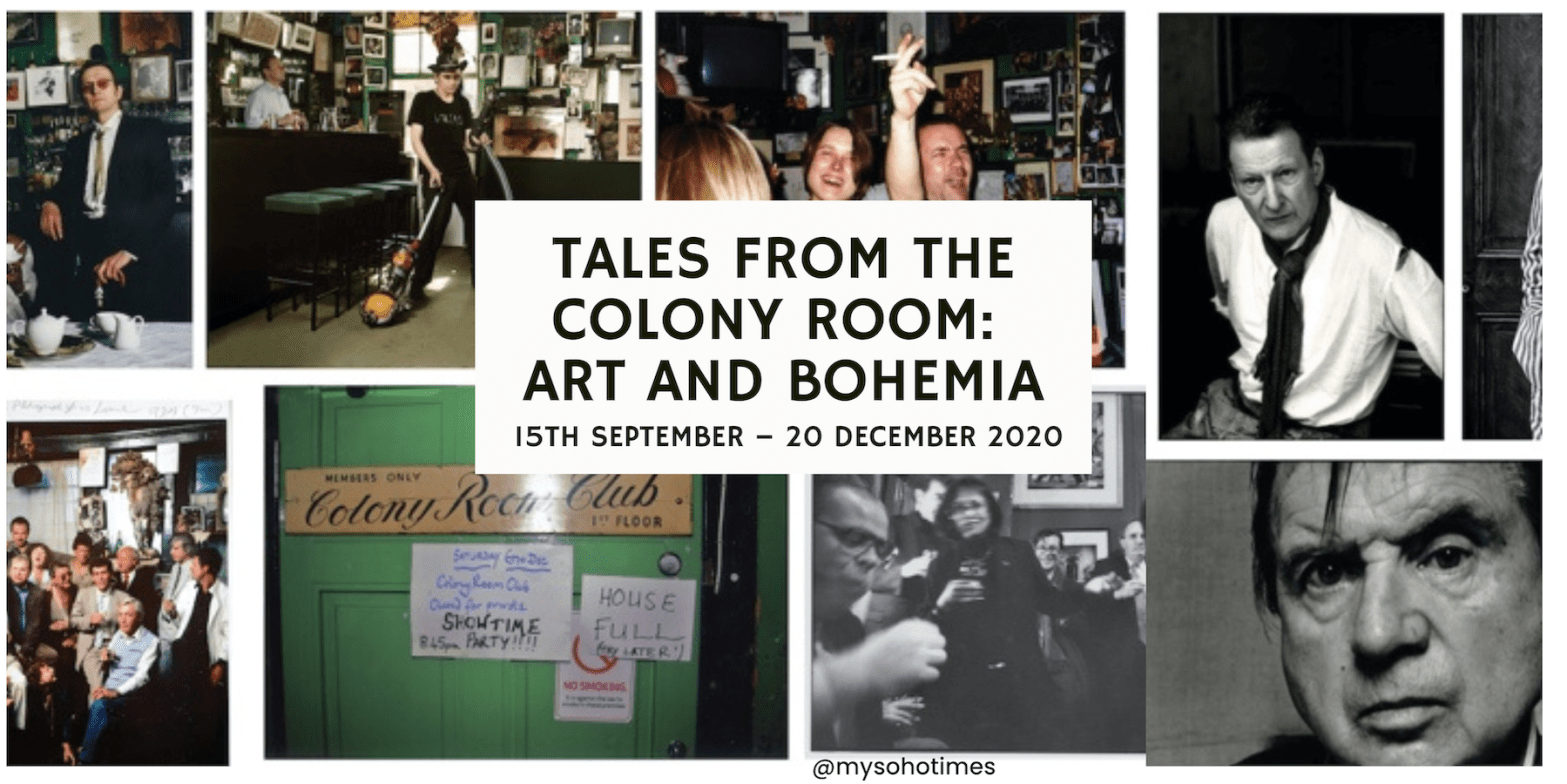
The news of the return of the iconic Colony Room Club, in the form of Darren Coffield‘s artistic recreation of Soho’s most infamous drinking den, to the West End has sparked excitement and nostalgia among London’s art and socialite circles. We turn our gaze back in time to reflect upon Tales from the Colony Room: Art and Bohemia, the captivating exhibition of the club’s rich history and the bohemian spirit it embodied.
If the walls could speak…
What tales from the green walls of Soho’s Colony Room Club would they tell? What hidden secrets would they reveal about its regulars? Rumour has it if you weren’t interesting enough you got kicked out. Freya Starr takes a look at Tales from the Colony Room: Art and Bohemia at the Dellasposa Gallery.
For the seasoned Soho frequenter, the name ‘The Colony Room Club’ strikes deeper than most. Whether it inspires fear, glee or for the lucky few, a nostalgic feel for the not-so-distant past, there’s no ignoring the infamous private members club, notorious for its debauched drinking and adorned by many famous faces over the years..
Now more than a decade after its closure in 2008 – following six glorious decades of depravity – the Dellasposa Gallery’s exhibition, ‘Tales from the Colony Room: Art and Bohemia’ celebrates, amongst many other things, the artistic brilliance that graced its four walls. Francis Bacon, Lucien Freud, Tracey Emin and Damien Hirst were among many of the luminaries of the age who regularly drank and exchanged ideas at the famed haunt.
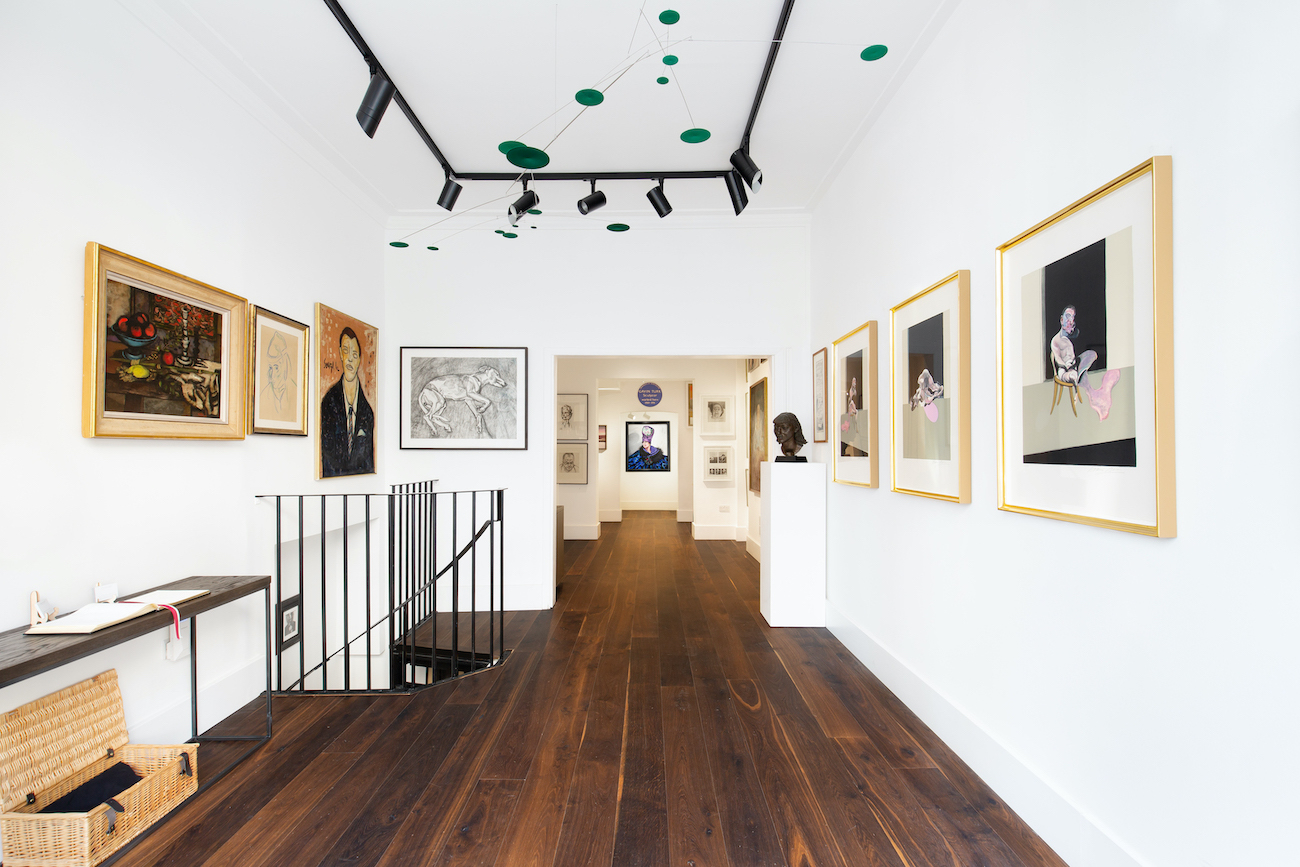
Artist and curator of the exhibition Darren Coffield was a long-standing club member who began his days there as an art student. The exhibition coincides with the release of Coffield’s book, ‘The Colony Room Club: Soho’s Lost Bohemia’, which traces the oral history of the club from its inception in 1948 through interviews with its members.
The journey of collation and execution has been an extremely personal one for him. He believes that the club has maintained its legendary status due not only to its famous habituees, but also to the dysfunctional family feeling it fostered. And of course, the tales of outrageous behaviour that arose.
“It was a very private space, the club. But I think that’s what gave it this air. There was no signage, you walked through an anonymous doorway. So if you didn’t know it was there then you’d never find it.
It had this air about it of being slightly obscure. It was like Alice in Wonderland, going down the hole with the rabbit, but rather you go up the stairs.”
The retrospective sees an eclectic mix of art, a reflection of the changing nature of art down the years. On the ground floor, a whimsical Freud portraiture hangs a room away from starker, more shocking works from the YBAs. While a step down to basement level, fluorescent lettering above the stairwell reads ‘Peep Show’ and covers photography from the likes of John Deakin.
Rarely can such a diametric in the art world and over the progression of decades be seen in a single exhibition. It speaks volumes of the variety of talent that made the Colony Room a second home to artists for so many years.
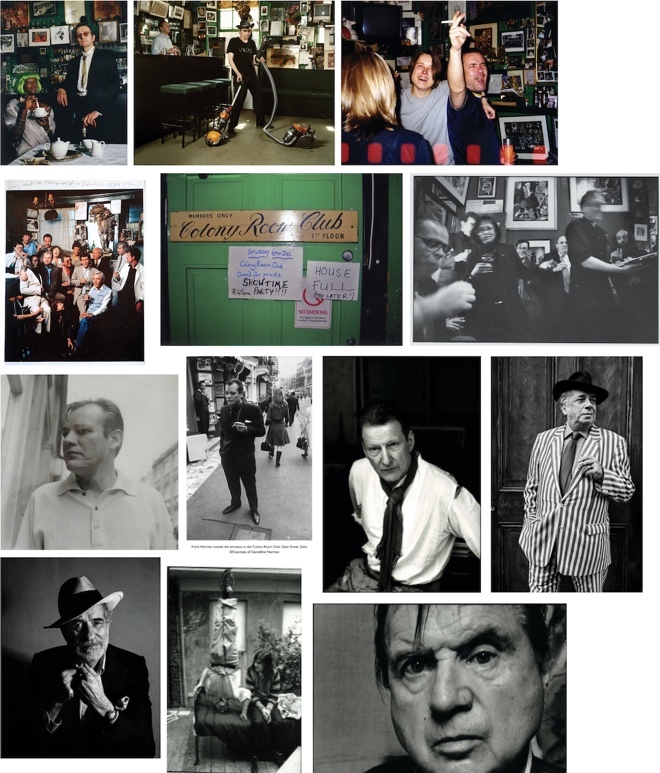
“The members there were breaking the boundaries of art.” Coffield explains, “And interestingly, a lot of the concepts these artists were rebelling against and coming to the Colony Room with, have become mainstream ideas. It was because it was a place full of like-minded people, who came there to entertain each other. It was a space where all the misfits hung out.”
The club was established on Soho’s Dean Street in 1948 by Muriel Belcher, the legendary proprietress credited with helping launch Francis Bacon’s career; she affectionately referred to him as her ‘daughter’.
Membership was awarded on the basis of skill in impressing the crowd with witty, clever conversation, rather than a standard payment package. Coffield’s book features the voices of many Soho artists and characters who frequented the club. The author explains that its rich history made the process of collation fascinating.
“Above all, what was great was it didn’t matter if you were a window cleaner or a famous film star, if you could hold your own, you were up there.” Coffield says. A fitting epitaph to the club and times gone by.
Written by Freya Starr. This article was originally published in the Autumn 2020 issue of My Soho Times magazine.
Share your thoughts in the comment box below!
Featured on the blog:

Get social with us – follow and tag us! @mysohotimes #MySohoTimes




Sign up to receive the latest issue of our magazine – straight to your inbox!
Plus, we’ll share the latest news, events, and discounts from our partners in and around Soho in a MONTHLY newsletter… Ready to join the club?
 MY SOHO TIMES
One thought on “Tales from the Colony Room: Art and Bohemia | My Soho Times”