Almost as long as there has been human civilisation, there has been perfume. Its history stretches back thousands of years — the word itself is derived from the Latin perfumare, meaning “to smoke through”, a nod to the burning of aromatic materials in ritual and reverence. The practice of crushing flowers, resins and oils to conjure fragrance can be traced to ancient Mesopotamia, Egypt and Greece, where scent was woven into the fabric of daily life: valued not only for adornment, but also for medicine and religious ceremony. The ingredients at the heart of those early concoctions, chiefly frankincense, myrrh, rose and jasmine, remain the building blocks of perfumes made today.
In London, scent has been an integral part of city life for centuries. Take a closer look at the capital’s history, and it is not hard to see why. A city defined by trade, by empire, by the constant movement of people and goods from every corner of the world, London has always been a place where things arrive, mix, and are transformed into something new.
The Birth of Modern Perfumery
The real turning point for perfume as we know it — bottled, distilled, and sold — came in the 18th century, mirroring the growing commercialisation of fragrance in neighbouring Paris, which had become an epicentre of upper-class fashion and beauty. It coincided, too, with the early stirrings of the Industrial Revolution, when consumer goods began their slow march into the hands of more than just the aristocracy. Scent was no longer purely sacred or medicinal. It was becoming aspirational, a class signifier.
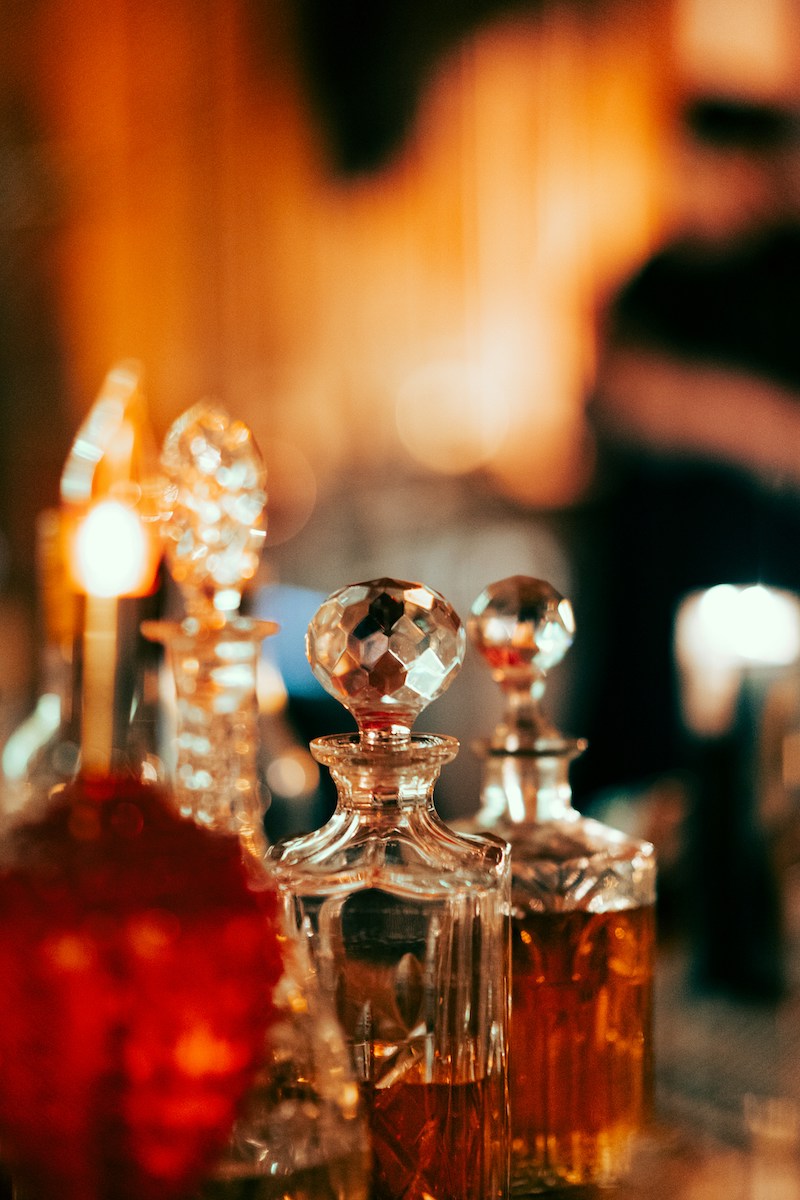
The oldest surviving perfumery in London, Floris, has occupied 89 Jermyn Street since it first opened its doors in 1730, and the business remains, remarkably, in the hands of the same family, now run by the eighth and ninth generations of the Floris lineage. It began, perhaps unexpectedly, as a barbershop and comb maker’s shop. But its reputation grew quickly through the late 18th and 19th centuries, earning a royal warrant and drawing in the elites of London high society. Today, Floris stands as a true embodiment of the old-world perfume house: step inside, and the sense of history is palpable. The mahogany cabinets displaying its bottles were purchased at the Great Exhibition of 1851; their dark wood still frames rows of glass much as it did more than 170 years ago. It is, in the best possible sense, a place out of time.
Several other perfumers founded in the early and mid-19th century — among them Penhaligon’s, Yardley, and the House of Creed — still trade today, likewise bearing royal warrants and a continued devotion to their heritage. But it would be reductive to think of these houses purely as museum pieces. Their enduring appeal, particularly within a market now so saturated it can feel overwhelming, lies in something less tangible than longevity. It lies in the scents themselves.
So what, exactly, is the relationship between London and the fragrances it produces? Is there such a thing as a distinctly London perfume?

A senior fragrance marketing expert we spoke to, with over a decade of experience, isn’t entirely convinced by the idea of a singular London scent identity. She does, however, offer a compelling perspective on what makes British perfumery distinctive.
“British brands tend to be quite experimental in how they build their scent portfolios,” she explains. “They offer something unique and eccentric — there’s a sense of British humour to it.”
That willingness to be a little strange, a little unexpected, a little self-aware is what sets houses like Penhaligon’s, with their irreverent, portrait-led fragrance collections, apart from their French and other European counterparts.
London’s multiplicity plays its own role, too. “It’s a very diverse city, so brands are catering to multiple kinds of consumers. It’s not one-size-fits-all.” That, perhaps, is the truest reflection of London in its perfumes: not a single note, but a chord. A city that has always absorbed influences from everywhere, and made something characteristically, defiantly its own.
It is worth pausing, for a moment, on the scents themselves, because ultimately, this is what it comes down to. Floris’ Jermyn Street, named for the very street the house has occupied for nearly three centuries, was inspired by the plane trees outside the shop window and the cotton of the famous shirtmakers nearby. Honey Oud is an altogether different creature: combining oud oil with English honey, it takes its inspiration from the Middle Eastern dessert, baklava.
Penhaligon’s, meanwhile, has built a modern reputation on fragrances that feel almost like a novel. Halfeti — named for the small Turkish village where rare black roses are said to bloom — uses notes of Bulgarian rose and jasmine, along with leather and amber. ‘The Favourite’, by contrast, is the house at its most playfully British, inspired by Sarah Churchill, legendary confidante of Queen Anne.
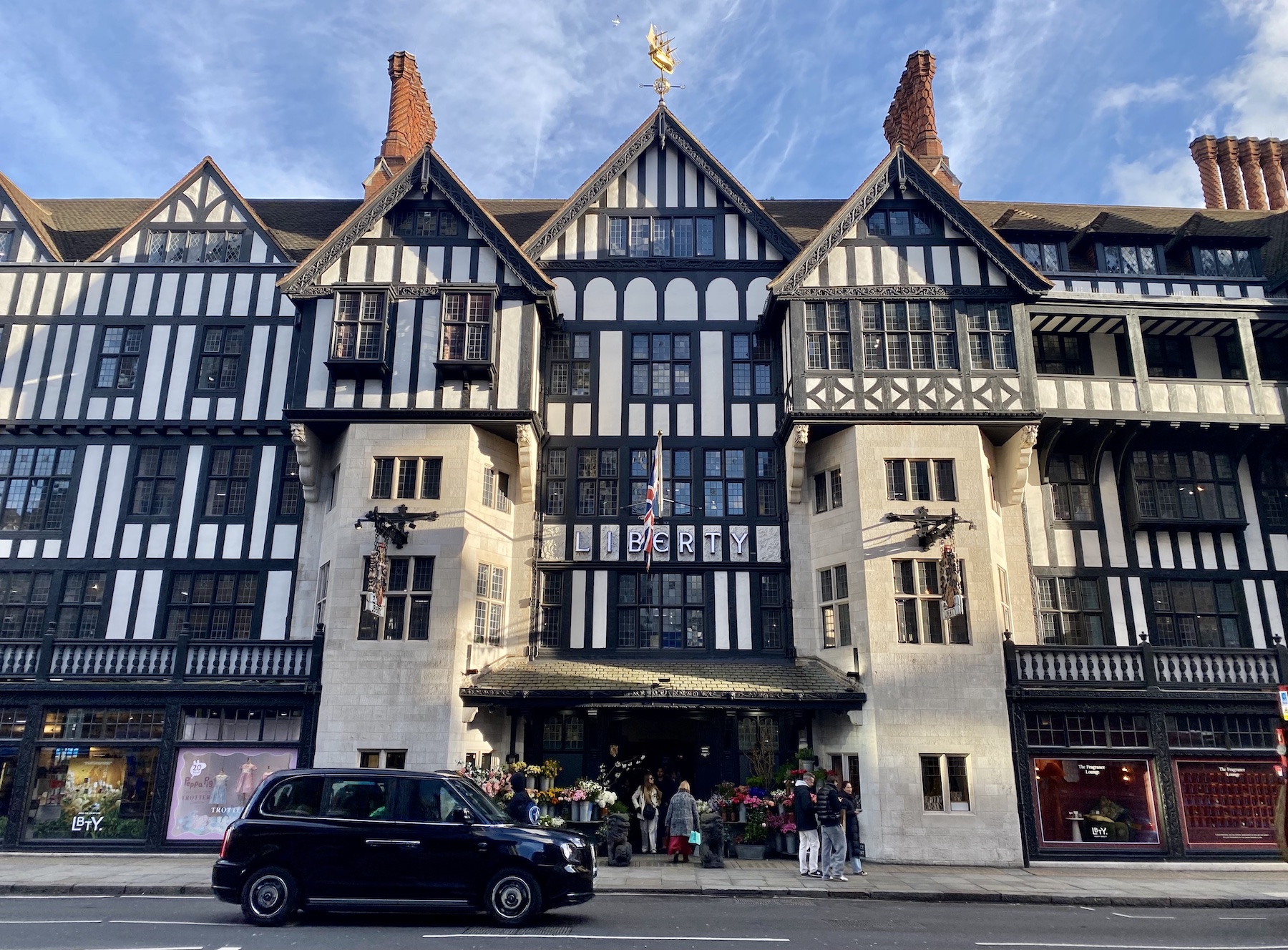
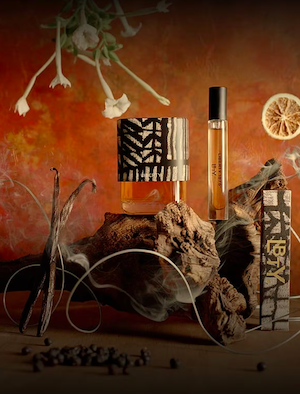
Then there is Liberty, the Tudor-framed Regent Street institution built from the timber of two retired Royal Navy ships, whose LBTY. Fagrance collection, launched in 2023, draws each of its eight scents from one of Liberty’s iconic archive textile prints. Tudor is inspired by — and intended to evoke — the building itself, with notes of ginger, nutmeg and juniper framed by woodland and resin. The whole line is exactly what you’d hope for from Liberty: beautiful, idiosyncratic, and impossible to place anywhere else.
The great perfume houses of London are not, in the end, simply selling a product. They are selling a feeling, or a memory — the connection between scent and recollection is often so strong that it can transport us instantly back to a moment. You can walk into Floris on Jermyn Street and emerge smelling of somewhere entirely imagined: a hothouse garden, a distant coastline, a country house in another century. But what can be said to truly set London’s perfumers apart is a willingness to be eccentric, to reach for the oblique rather than the obvious. In a city that has never quite managed to take itself entirely seriously, that spirit feels less like a brand decision and more like something absorbed from the streets themselves.
Written by Freya Starr | This article is part of The Spring Beauty Edit, celebrating the rituals in beauty, the brands, and boutiques that keep our neighbourhood glowing.
Share your thoughts in the comment box below!
More from the blog:
Get social with us – follow and tag us! @mysohotimes #MySohoTimes


Special Offers – Straight to Your Inbox!
Receive the latest news, events, and discounts from our partners in a MONTHLY newsletter… Ready to join the club?

