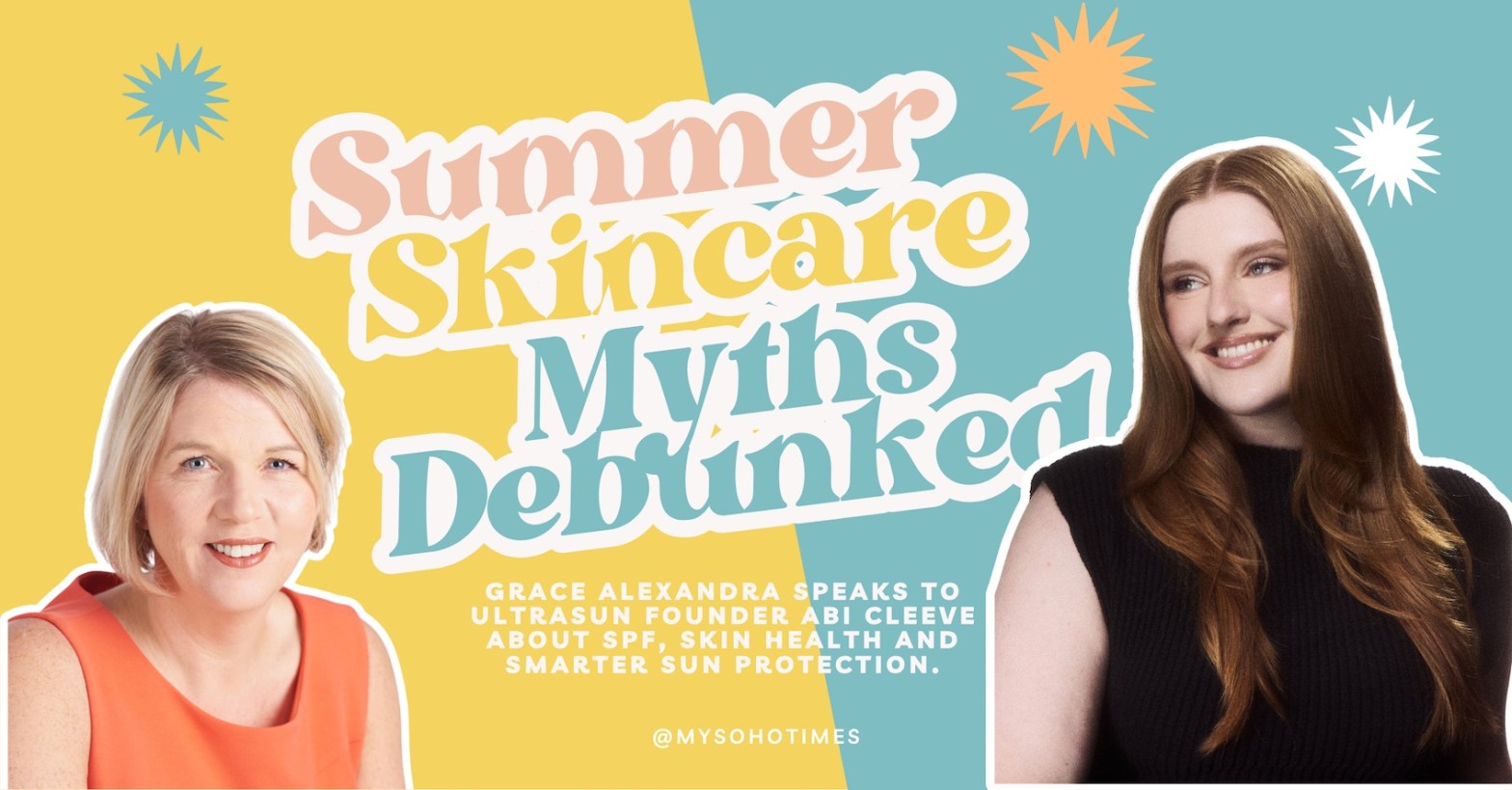
With summer in full swing and London basking in soaring temperatures, there’s never been a better time to refresh your sun care routine. While sunscreen is now a daily essential for many, confusion around SPF, tanning and UV exposure continues to circulate online.
My Soho Times beauty contributor Grace Alexandra caught up with Ultrasun founder Abi Cleeve to separate fact from fiction, discussing the biggest SPF myths, the importance of year-round sun protection and how to keep your skin healthy while enjoying the sunshine.
Q&A with Ultrasun Founder Abi Cleeve
Does SPF stop you from tanning?
It’s one of the most persistent misconceptions I come across, and I completely understand where it comes from. People have spent years being told that sunscreen blocks the sun, which is exactly what it’s supposed to do – to a point. But no sunscreen filters out 100% of UV rays, and tanning is the skin’s own biological response to the UV that does get through.
What SPF 50 does is significantly reduce the amount of ultraviolet radiation reaching the skin, which means that if tanning happens, it tends to happen more gradually and with far less risk of the damage that accumulates beneath the surface. At Ultrasun, we display our UVA absorbance percentage on the packaging. Our SPF 50 formulas provide 95% UVA absorbance because we want people to understand exactly what they’re working with rather than guessing.
A slower, more gradual tan with protection in place is not only safer; it tends to look better and last longer too because the skin barrier stays healthier.
“The goal was never to stop people enjoying the sun. It’s always been to help them do it without damaging their skin.”

Has social media improved sun protection habits, or created new myths?
Honestly, both.
I say that having spent nearly thirty years trying to remove every possible obstacle between people and adequate UV protection. When I started, the barriers were very practical: thick, greasy textures, formulas that left a white cast, nothing designed for darker skin tones and nothing that felt like a pleasure to wear. We worked hard on clear gels, skincare-SPF hybrids, glimmer, tan activators, sprays and tinted formulas, all with the goal of making protection something people actually wanted to use.
Social media has accelerated awareness in a way that would have taken decades through traditional education channels. The conversation around photo-ageing and SPF as a daily non-negotiable, rather than a holiday afterthought, has happened at real pace, and I’m genuinely heartened by it.
But misinformation also spreads quickly. The idea that a high SPF is harmful, that mineral or chemical filters are dangerous, or that you can skip protection on a cloudy day are myths that continue to circulate. They risk undoing a lot of the progress we’ve made, so I find myself heartened and frustrated in equal measure.
Are people now expecting SPF to do more than just prevent sunburn?
The “skinification” trend reflects something we’ve believed for a long time: the skin on your body deserves the same level of attention as the skin on your face.
Consumers have come to expect real performance from their skincare – active ingredients that deliver results, textures that feel good and formulations with benefits beyond the basics. They’re now, quite rightly, expecting the same from body SPF.
Our face formulas have included Ectoin and pigmentation-mitigating actives for years because UV protection has always been the first priority, with targeted skincare benefits as the natural extension. Now we’re applying that same thinking to our body range.
Our body formulas offer genuine hydration alongside very high broad-spectrum protection, while our newest formula goes further by incorporating a feel-good peptide that works alongside the SPF. Non-greasy, easily absorbed, highly protective and nourishing – that’s simply what good formulation looks like.
If you could change just one sun protection habit this summer, what would it be?
Apply sunscreen before you go outside, not when you arrive at the pool.
Most people still reach for sunscreen once they’re already outdoors, after they’ve been exposed walking to breakfast, sitting outside or settling into the day. What many don’t realise is that applying sunscreen in direct sunlight can reduce the protection you actually receive by up to 60%. The product may not bind properly to the skin, and evaporation can begin before it’s fully absorbed.
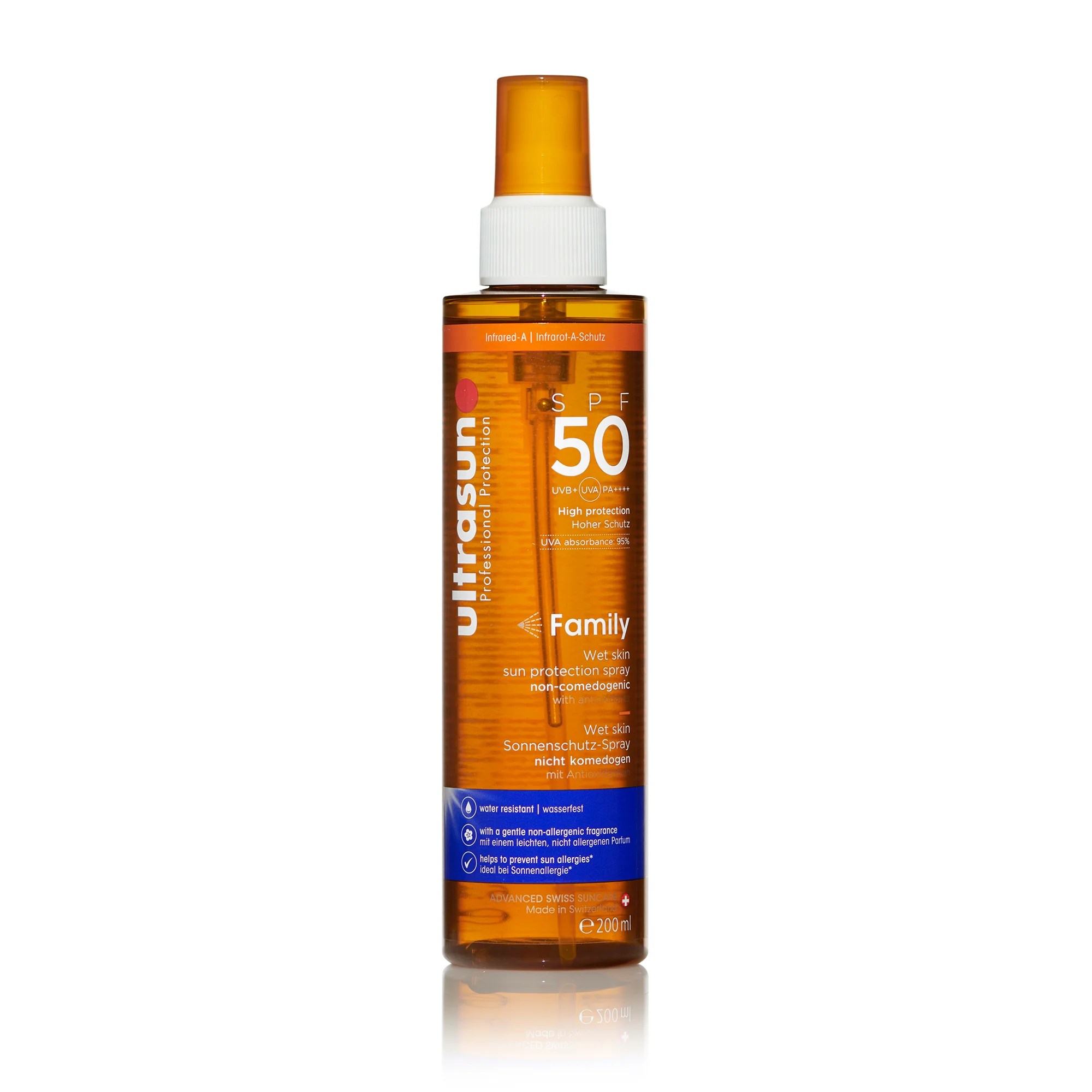
Ideally, apply your sunscreen to dry skin around 15 minutes before sun exposure. If you need to top up after swimming, our Family Wet Skin Spray SPF 50 is designed specifically for that. It can be applied directly to wet or dry skin without towelling off and is suitable for the whole family.
“Apply sunscreen before you leave the house, not when you arrive at the pool.”
What’s one SPF habit everyone should adopt all year round?
Stop relying on the SPF in your foundation.
It’s one of the most common assumptions I hear, but it simply doesn’t provide the level of protection most people think it does. You would need to apply foundation in an extremely thick layer to achieve the advertised SPF, and even then the UVA protection rarely compares with a dedicated facial sunscreen.
Our face formulas provide 95% UVA absorbance. That level of filtration matters because UVA rays are one of the biggest contributors to photo-ageing and pigmentation, whether the sun is shining or not.
For everyday protection, I’d always recommend a dedicated face SPF, such as Photo Age Anti-Pigmentation SPF 50+, which combines broad-spectrum protection with brightening skincare ingredients. It also works beautifully as a make-up primer and doesn’t cause flashback in photographs, making it a favourite among professional make-up artists.
What is Neuroglow®, and how does it work?
Neuroglow® is a natural active ingredient derived from Persicaria tinctoria, a plant native to Provence. Rather than relying solely on UV exposure to trigger the skin’s tanning response, it’s designed to support melanogenesis independently, helping encourage a natural-looking glow while working alongside SPF protection.
Early research also suggests it may help support the release of some of the mood-lifting compounds our bodies naturally associate with spending time in the sunshine.
What I find particularly exciting is that Neuroglow® works in harmony with SPF filters rather than against them. Protection isn’t compromised, nor is the tanning response.
Most importantly, we’ve seen genuine behaviour change from customers. People who love tanning often reduce their SPF or spend longer in the sun if they feel they’re not getting enough colour. By helping to encourage a gradual glow while maintaining very high UVA and UVB protection, people are more willing to stick with a higher SPF, take breaks in the shade and make healthier choices overall.
That’s exactly the outcome we’ve always wanted to achieve.
Explore the Ultrasun range here: www.ultrasun.co.uk
Written by Grace Alexandra @styledbyalexandrra
Share your thoughts in the comment box below!
Continue reading:


Get social with us – follow and tag us! @mysohotimes #MySohoTimes



Special Offers – Straight to Your Inbox!
Receive the latest news, events, and discounts from our partners in a MONTHLY newsletter… Ready to join the club?

