
With 10th September designated as World Suicide Prevention Day, Samaritans, the leading suicide prevention charity, is offering advice on how we can all help look out for each other. Faced with new challenges every day, people can often find it difficult to cope. The latest suicides statistics showed that in 2018, in the UK and Republic of Ireland, more than 6,800 people died by suicide. Suicide is preventable, it’s not inevitable.
Caroline, a Listening Volunteer at Central London Samaritans explains to My Soho Times how asking directly about suicidal thoughts can help save lives… it’s time to break the stigma.

Walking round the Soho streets on a late summer evening past the partygoers spilling out of the pubs onto the pavements, or the young people taking selfies on the benches on Carnaby Street, or the late-night shoppers, can be a glorious and life-affirming experience. To be swept along in the excitement. To be smack in the centre of this glorious city of ours.
But what if you’re struggling to get by? Feeling like everyone else’s existence is picture perfect and they are “living their best life 24/7”. What if you are reluctant to burden your friends with your worries in case you are seen as being a drag?
Samaritans are at the end of the phone 24/7 to listen, support and be there for anyone who needs to talk. More people die from taking their own lives than are murdered or perish in wars – and men are nearly four times more likely to die from suicide than women. Here in Soho is the largest branch of Samaritans in the country and we have just opened our doors again after lockdown to see the people who need us face-to-face.
It can take courage sometimes to admit that you need help. Scarlett Moffat, the bubbly TV personality who’s appeared on Gogglebox and I’m A Celebrity…Get Me Out Of Here! became an ambassador for Samaritans a few months ago.
“Sometimes it can feel like there is a negative stigma around admitting that you’re lonely, but it’s something that most people will have experienced at one point in their life. In the world of social media, it’s not always clear to see when people are feeling sad or lonely.”
“The pandemic was particularly tough for a lot of people. I rang Samaritans for support and would urge anyone else struggling to do so too,” she said. “Talking to someone who didn’t know me, or judge me, really helped when I wanted to talk about how I was feeling.”

Loneliness can be a silent killer and social media can act as a curtain that we draw over our real feelings and fears. With so many more people working from home now, sometimes days can pass when they never speak to another human being. The rising cost of living is going to mean more parents will be living with stress and anxiety. Young people are worried about their future and old people are struggling to connect to a changing world. In these circumstances it’s easy to become consumed by negative feelings and thoughts, which, unless they are talked about, can spiral into depression and dark thoughts.
But opening up to someone – a Samaritan or a friend or a family member – can really help. 10th September is designated as World Suicide Prevention Day, a day when every year organisations and communities around the world come together to raise awareness of how we can create a world where fewer people die by suicide. We can all play a part in this movement. We can look out for each other: you don’t have to be Sigmund Freud, you just have to be there and listen. Let the person you are concerned about know that they aren’t being a burden and give them the time and space to tell you what they are going through and the thoughts that are troubling them. And don’t shy away from using the S word – we’ve done the research and evidence* shows that coming out and asking someone if they are feeling suicidal or having suicidal thoughts doesn’t put ideas into their heads or make them feel worse. It can be a relief to be able to talk freely and honestly about a subject that many feel is still taboo. And if they say, “No, of course not. Why would you think that?” – well, that’s a good thing, right?
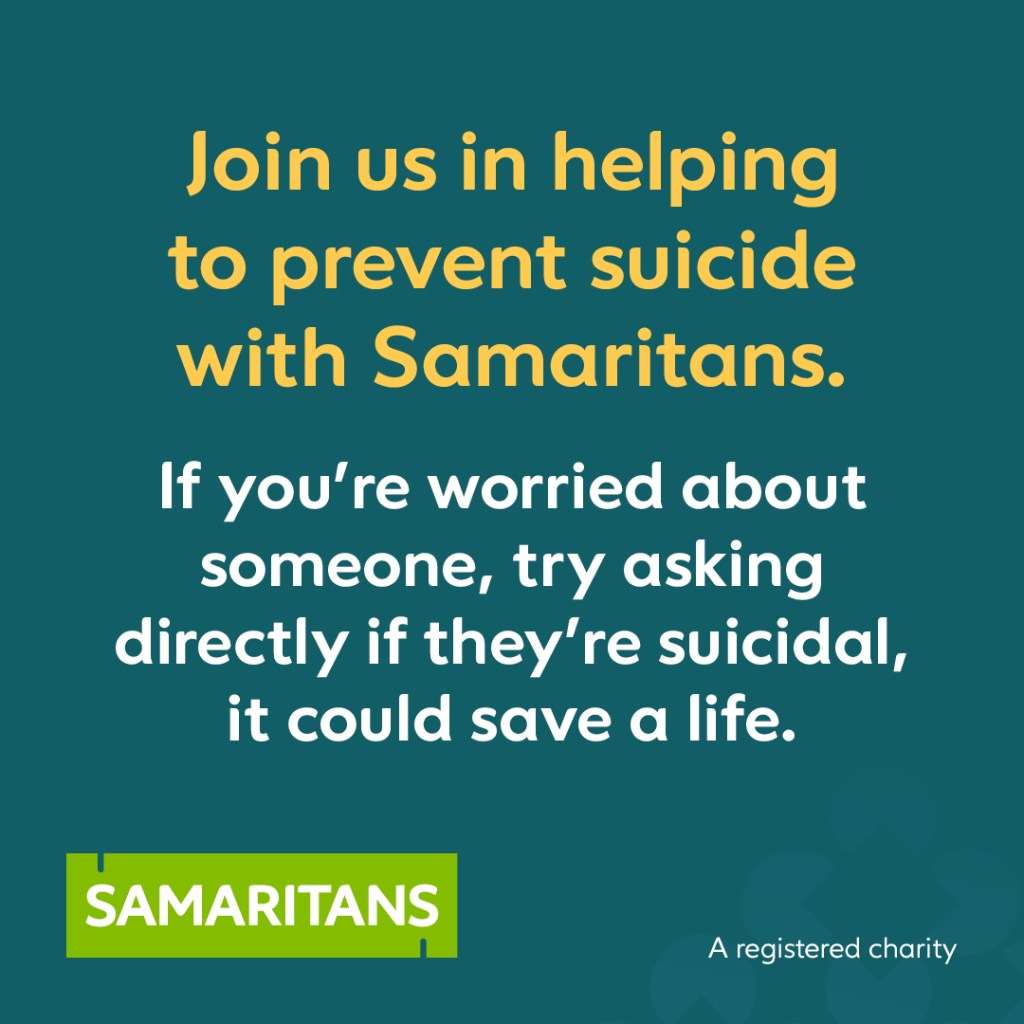
Help is available
If you know someone feeling suicidal, there is help out there. Anyone can contact Samaritans FREE any time from any phone on 116 123, even a mobile without credit. This number won’t show up on their phone bill. Or email jo@samaritans.org or visit http://www.samaritans.org.
Every single day we at Samaritans respond to around 10,000 calls for help. Some people phone once and find it’s enough to help them through a crisis; others we know will need more time and space. We want to be there for anyone who is finding it difficult to cope. And we are sure that many of you feel the same. So, if you want to get involved in any way, please follow us on Twitter or Facebook or Instagram. Who knows – maybe you’ll feel you’d like to train as a Samaritan.
You could save a life.
Written by Caroline, Listening Volunteer at Central London Samaritans | @samaritans on Twitter and LinkedIn, and @samaritanscharity on Facebook and Instagram
*Dazzi, T., Gribble, R., Wessely, S., & Fear, N. (2014). Does asking about suicide and related behaviours induce suicidal ideation? What is the evidence? Psychological Medicine, 44(16), 3361-3363. doi:10.1017/S0033291714001299
Share your thoughts in the comment box below!
Get social – follow and tag us! @mysohotimes #MySohoTimes
Sign up to receive the latest issue of our magazine – straight to your inbox!
Plus, we’ll share the latest news, events, and discounts from our partners in and around Soho in a MONTHLY newsletter… Ready to join the club?
 MY SOHO TIMES
One thought on “Mental Health Matters: How asking directly about suicidal thoughts can help save lives”